Finding support within yourself
- understanding feelings and needs
- clarifying values
- making decisions with confidence
Psychological support for adults
Together we explore feelings, needs and familiar ways of responding, so you can find support within yourself and choose changes that genuinely fit your life.
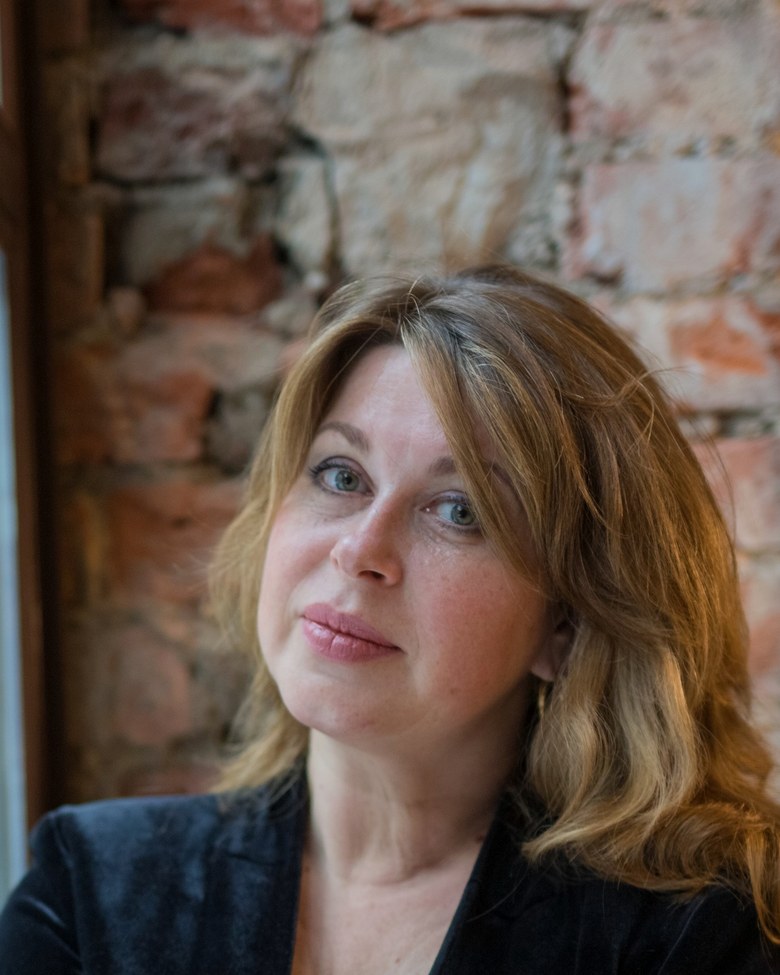
01 / Introduction
“It matters to me to create a space where difficult things can be spoken about without fear of judgement — attentively, respectfully, and at your pace.”
Carl Gustav Jung wrote that loneliness comes not from having no people around, but from being unable to speak with them about what seems important. That is why our work benefits from your willingness to open up gradually and to speak about what truly matters to you. We choose the pace and depth together. C. G. Jung, “Memories, Dreams, Reflections” ↗

How I can help
You do not need a perfectly worded request. You can begin with whatever is most difficult now — from self-doubt or a life transition to the effects of trauma or a depressive state.
Support with complex conditions: within psychological counselling, I work with the effects of traumatic experience, depressive states, panic attacks and addictive behaviour. This work may take longer and may need to be combined with medical or specialist care. Counselling is not intended for emergencies and does not replace medical or psychiatric support.
Formats and fees
The average period of work is two to three months. Addictive behaviour, depressive states and the effects of traumatic experience may require longer support.
Individual consultation
Weekly meetings for exploring your concern, trying new approaches and noticing change over time.
Single-session format
A focused two-hour consultation devoted to one specific issue.
How I work
In my work I use different methods, depending on the request and on the particular person. What suits you is something we decide together, guided by your situation and your pace.
My practical training began with body-oriented therapy and the Feldenkrais Method. The title of Bessel van der Kolk’s book, “The Body Keeps the Score” ↗, captures an idea that matters to me. Even after an experience has been discussed, the body may continue to respond with tension, shutdown or intense reactions. Sometimes we need to slow down and relax; at other times, to restore energy and activity. I treat the body as a source of signals that deserves attention and care.
The term “gold standard” became attached to cognitive behavioural therapy (CBT) in the scientific community thanks to large-scale research into its effectiveness. This approach helps identify links between thoughts, emotions and behaviour and understand why familiar responses may continue even when they are no longer helpful. Small tasks between meetings help bring new skills into everyday life and gradually strengthen your ability to cope independently.
You do not need to know how to draw in order to work with art therapy, just as you do not need to know how to sing in order to speak. Yes, art therapy is recognised as a clinically effective method, but mainly as a complementary tool within a broader course of care. Images and the creative process offer a gentle way to approach painful feelings and experiences that cannot be expressed in words. Some traumatic experiences may remain in memory as emotional and visual traces. Art therapy can help access, reflect on and express such experiences. For me, it is one of the gentlest ways of working with trauma and its effects.

About me
Family is important to me, and I love nature. We have a cat and a dog. I enjoy dancing, cooking and drawing.
I like the mountains and the sea, the first green leaves before road dust settles on them, freshly fallen snow and golden autumn leaves. I love the scent of pine, vanilla and freshly brewed coffee.
I genuinely love science, and psychology is a science. I taught at RSUH and ASOU and worked at HSE University. My academic and research background helps me pay close attention to evidence and to the context of each person’s life. You can find my publications below and on B17.
Lomonosov Moscow State University, Faculty of Psychology
Fundamental education in psychology. Qualification: psychologist, teacher of psychology
Candidate of Psychological Sciences
“Cognitive Behavioural Therapy (CBT): Full Course”
Academy of Modern Psychology: 516 hrs of taught modules, 12 hrs of group supervision, 24 hrs of group intervision
“Modern Practical Art Therapy”
Institute of Practical Psychology and Counselling
“The Body as a Symptom: Art Therapy for Psychosomatics and Body Image”
International Art Therapy School · method: art therapy for psychosomatic symptoms and body image · teacher: Elena Zotkina
Body therapy — IIBA Moscow Training Program
International Institute for Bioenergetic Analysis, workshops in Moscow (2016–2019). Total 138 hrs.
“Working with Attachment through Art Therapy Methods”
International Art Therapy School · method: art-therapy work with secure, anxious-ambivalent, anxious-avoidant and disorganised attachment styles · teacher: Beverly A’Court (Findhorn Foundation, UK) · January–March 2026
“Anti-burnout through Creativity: Art-based Assessment of Exhaustion”
International Art Therapy School · method: art-based assessment and creative practices · teacher: Eliana Markman · October 2025
“Emotional Burnout: Art-therapy Assessment Techniques and Working Strategies”
International Art Therapy School · method: art-therapy assessment and techniques for burnout · teacher: V. A. Turgel · September 2025
“CBT for Complex Cases”
Beck Institute · method: cognitive behavioural therapy for complex cases
“Single Session Therapy Workshop”
Method: single-session therapy · teacher: Dr Flavio Cannistrà
“The Feldenkrais Method: Conscious Movement” seminar
Method: body work through conscious movement · May 2016
Credentials
These diplomas and certificates confirm the education and professional training listed above.
IIBA seminars summary PDF (1 page) ↗
Supporting documents (scans and certificates) are available on request before we start working together.
Professional communities
Information about professional memberships will appear here after membership has been confirmed.
Testimonials
These testimonials were published by clients on Oksana’s public profile at the professional B17 platform.
“Oksana proved to be an attentive and professional psychologist. I especially appreciated the use of art therapy…”
“She taught me how to cope with panic attacks and explained what to do…”
“She offered not only support, but clear, practical techniques that could be used in everyday life…”
Quotes are shortened without changing their meaning. Full texts and publication dates are available through the link.
Working together
A psychologist does not provide a ready-made instruction manual for life. Change becomes possible when we explore what is happening together and you try new things between meetings.
Openness cannot be demanded. We can begin by acknowledging that something is hard to discuss and gradually find a depth that feels safe enough.
Specific situations help us see how events, thoughts, feelings, bodily reactions and actions are connected.
Tell me what helps, what does not fit or raises doubts. This allows us to adjust the pace and the way we work.
Lasting change usually takes time and repetition. Two to three months is an average guide, but it depends on the concern and circumstances.
Small observations and exercises help transfer insights from counselling into everyday life. Any task can be discussed and adjusted.
You may ask about methods, the process and my professional boundaries. It matters that you understand what we are doing and why.
Articles
Original writing and research. Future posts will appear under /articles/.
National Psychological Journal
↗ Author profileMSU ISTINA
↗Topics: anxiety and self-regulation, boundaries, body and emotions, single-session work.
What to read
Books I would like to recommend and my thoughts about them will appear here.
A short review and personal recommendation will appear here.
FAQ
If your question is not here, send a message via WhatsApp — link in the contact section below.
Yes. “I am struggling” or “this no longer works for me” is enough to start a conversation and gradually clarify the issue.
Two to three months of regular meetings is an average guide. Addictive behaviour, depressive states and the effects of traumatic experience may require longer support. The exact duration cannot be predicted in advance; we will review progress and goals together.
Choose a quiet place where you will not be disturbed. You may write down topics you want to discuss, but this is optional.
In CBT work I may suggest a small observation or exercise between meetings. We discuss its purpose and scope first. If it does not fit or feels too difficult, it can be changed.
Yes. Questions and feedback help make the work clearer and more precise. You can talk about doubts, disagreement, discomfort and what has been useful.
Contact
Tell me your name and briefly what you would like help with. You can contact me through WhatsApp or Telegram.